15 Interesting Facts About Montana That Will Amaze You!
Discover the rugged beauty and interesting facts about montana! From majestic mountains to vast plains, explore America's treasure trove of natural wonders.
Mar 05, 2025370 Shares41.1K Views
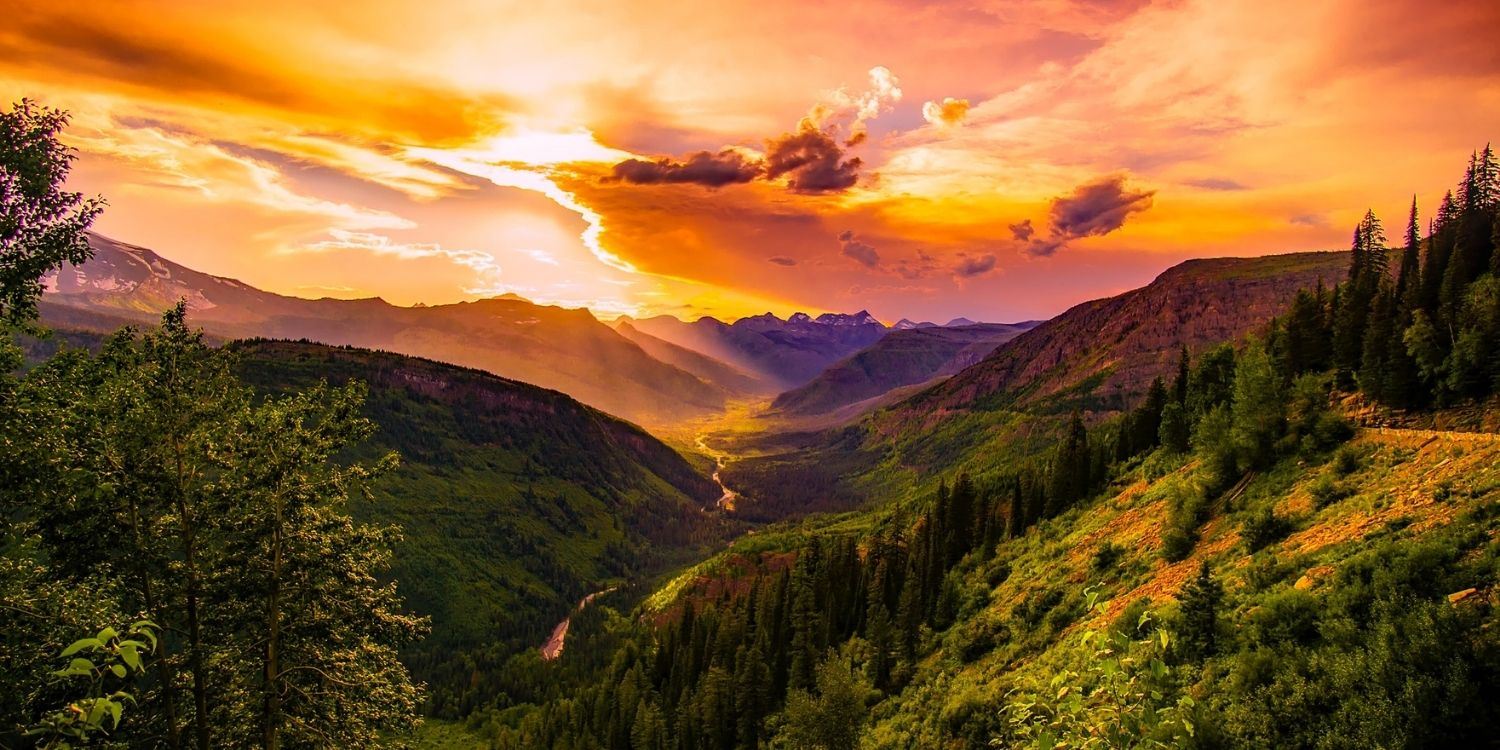
Known as "Big Sky Country" but colloquially dubbed the "Treasure State," Montana became the 41st state to join the Union on November 8, 1889. With 1,068,778 residents (as of 2019), it ranks as the 43rd most populous state. Wyoming, South Dakota, North Dakota, and Idaho encircle Montana.
It is the fourth largest state, covering 147,040 square miles (380,800 square kilometers) of land and water. Montana's capital, Helena, is located in the western portion of the state. That's enough quick information on Big Sky Country; learn more interesting facts about montana!
1. People Have Lived In Montana For More Than 12,000 Years
The Paleo-Indians were the earliest people to settle in North America. 14,000 years ago, at the conclusion of the Ice Age, the first people crossed the Bering Strait from Russia into North America.
The Anzick site, located close to Wilsall, Montana, is the site of the earliest known archeological indication of human habitation in the present-day state of Montana.
A male infant's remains were discovered, and after carbon dating, the results showed that the infant was between 11 and 13,000 years old.
2. Many Different Native American Tribes Lived In Montana When Europeans First Arrived On The Scene
The area that is now Montana has been home to numerous tribes for thousands of years; the earliest of these were hunter-gatherers who lived on the move.
These tribes changed socially and culturally over time, with some adopting more sedentary lifestyles than others.
Many tribes were present in the area when European explorers and traders first arrived, including the Gros Ventres, Blackfeet, and Assinniboine, who lived from the center to the northeast, the Crow in the central south, and the Cheyenne in the southeast.
The Kootenai and Salish dwelt in the west, while other smaller tribes, such as Kalispel and Pend d'Oreille, were located nearer to the western mountains.
3. Montana Was Claimed By The French Initially
France claimed the Americas, much as Britain colonized the northwest of the present-day United States and Spain colonized the southern regions around the country of Mexico.
The majority of France's claims in North America, known as New France, later became known as Louisiana.However, this region stretched inland from Canada all the way down to Mexico, making it far larger than the state of Louisiana as it is now.
France claimed large areas of land, including what is now Montana, but made little effort to colonize, survey, or explore the majority of it.
4. The USA Gained Control Of Montana In 1804
Napoleon Bonaparte, who dominated France at the turn of the 19th century, had interests outside of central North America.
The newly established United States of America and France came to an agreement whereby the US paid $15 million for the sale of French Louisiana.
On March 10, 1804, the United States annexed Montana as a portion of this territory.
5. Montana Was Largely Unexplored Before The Lewis And Clarke Expedition
Although many French or perhaps Spanish fur trappers and traders may have traveled through different sections of Montana, the area was mostly unexplored until the US acquired it.
President Thomas Jefferson was interested in learning more about the people, plants, and animals that called the recently acquired Louisiana Territory home.
He enlisted William Clark and Meriwether Lewis to explore and study this uncharted territory.
6. The First Permanent European Settlement In Montana Was A Jesuit Mission
The Salish people had heard stories from neighboring tribes about Jesuit missionaries who would visit villages and bring new agricultural, medical, and religious practices.
In 1831, many Salish traveled to Missouri in order to return with a missionary for their village.After numerous attempts by the Salish, Father Pierre-Jean DeSmet did not visit Montana until 1841.
In the same year, DeSmet established the community known as St. Mary's Mission, which had log homes, a pharmacy, and a chapel.
7. It Took A Gold Rush For Montana Territory To Be Founded
Originally, the entire area around Montana, which includes sections of the Dakotas, Oregon, Washington, Idaho, and Montana today, was a part of Louisiana Territory.
Modern-day By the middle of the 19th century, Idaho Territory, Oregon Territory, Washington Territory, and Dakota Territory were the four newly created territories that shared Montana.
By the 1860s, important resources such as gold, silver, coal, lead, and copper were discovered in the mountains to the west. Tens of thousands of people descended upon the region to lay claim.
As the need for greater organization in the area became evident, Montana Territory was established in 1864.
8. Montana Has A Spanish Name
It doesn't need a linguistics degree to understand the link between the state's name and the Spanish term montaña, which means "mountain."
The entire mountainous western region of North America was named Montaña del Norte during the early era of Spanish discovery in the Americas.
It's interesting to note that the name Montana was originally proposed during the creation of the Idaho Territory.
The name was first refused, but it was approved after Montana Territory was established.
9. Montana Has A Small Claim To The US’ First National Park
It's none other than Yellowstone National Park, naturally. Parts of the park are in southwest Montana, while Wyoming makes up the vast majority of the area.
The West Entrance, North Entrance, and Northeast Entrance are all located in Montana, therefore, in spite of this, there are actually more entrances to Yellowstone from Montana than from Wyoming.
Given that it's the only entrance that allows entry to the park all year round, the North Entrance is among the greatest.
10. The Largest Snowflake Ever Recorded Landed In Montana
Snowflakes are usually quite tiny, aren't they? But now that I think of it, the biggest one I've ever seen was probably a little wider than half an inch (1.25 cm)!
It turns out that in the mountains, Montana seems to magically make them huge. A snowflake that was measured to be about 15 inches (38 cm) across was observed on January 28, 1887!
11. Montana Is Home To The Only Remaining Evidence Of Lewis And Clarke’s Trail
There's a really unremarkable-looking sandstone pillar overlooking the Yellowstone River in the Montana town of Billings.
Known as Pompey's Pillar, Captain William Clarke gave it the name of Sacajawea's son. Petroglyphs, or designs of animals cut into the stone, are remnants of ancient societies left on the pillar's sandstone walls.
In addition, Clarke left his signature on an old stone, adding his name and the date he traveled through the area.
The route that Lewis and Clarke followed on their historic expedition is only known from this document.
12. Montana Has The Largest Population Of Grizzly Bears In All The Lower 48 States
Thus, it makes sense that Montana's state animal is the grizzly bear. But Montana is home to more than simply grizzly bears.
Numerous species of wildlife can be found there, including as wolves, coyotes, moose, buffalo, elk, antelope, foxes, and grizzly bears.
Some of the last remaining buffalo in the world that may be spotted wandering freely in the wild are those located in Montana.
13. In Montana, Married Women Are Forbidden By Law To Go Fishing On A Sunday By Themselves
However, there are other strange fishing-related laws as well. For example, single women are not permitted to go fishing on any day of the week!
Additionally, unless you have another person in the car to chaperone the sheep, you are not permitted to drive with a sheep.
It's against the law to toss anything across the street in Helena, the capital of Montana.
That's all well and good, but why is it against the law to drive in Whitehall while ice picks are fastened to the wheels of a vehicle?
14. Montana Is Famous For Its Water
Well, not precisely its water, but Montana is well-known for a lot of water-related things!
The largest US lake west of the Great Lakes is Flathead Lake, which is situated in northwest Montana.
Montana's alpine water is also exceptional! This water feeds a network of rivers that empty into the Pacific, Atlantic, and Arctic oceans.
15. Sapphires Found In Montana Are Some Of The Finest In The World
These specific sapphires are among the priciest of their kind discovered anywhere in the world and are now referred to as Yogo sapphires.
They weren't always so highly esteemed. Tiny blue stones were frequently discovered when panning for gold in Montana during the early days of the gold rush.
Prospectors would frequently discard the stones that seemed to have little value until a man named Jake Hoover had Tiffany's in New York appraise them.
Tiffany's pronounced them to be the best precious stones ever discovered in the United States, if not the entire globe.
FAQ's About Interesting Facts About Montana
What Was Montana Famous For?
It is quite right that the state adopted "oro y plata," which translates to "gold and silver." Rich natural and mineral resources, such as coal, copper, gold, manganese, sapphire, silver, lead, oil, and zinc, are well-known in the Treasure State.
What Makes Montana So Special?
The fauna and natural splendor of Montana are well-known. Mountains, foothills (hills at the margin of a mountain range), badlands (an area formed by erosion of rocks and hills with limited vegetation), and prairies (flat grasslands) can all be seen when driving across Montana.
Do Any Billionaires Live In Montana?
Missoula has the highest concentration of billionaires of any city in Montana. Living in Missoula are two billionaires, with a combined net worth of $8.3 billion. Dennis Washington is the richest Missoula inhabitant, with a net worth of at least ten figures, with an estimated value of $6.3 billion.
Conclusion
If you're an outdoor enthusiast, Montana is the state for you! Interesting facts about montana, It's truly bucket list material, with year-round access to Yellowstone National Park, the greatest diversity of animals of any US state, and some of the nicest lakes in the western US. Add to that the extensive history of the Wild West, and you have a state that is superior to many others!
Jump to
1. People Have Lived In Montana For More Than 12,000 Years
2. Many Different Native American Tribes Lived In Montana When Europeans First Arrived On The Scene
3. Montana Was Claimed By The French Initially
4. The USA Gained Control Of Montana In 1804
5. Montana Was Largely Unexplored Before The Lewis And Clarke Expedition
6. The First Permanent European Settlement In Montana Was A Jesuit Mission
7. It Took A Gold Rush For Montana Territory To Be Founded
8. Montana Has A Spanish Name
9. Montana Has A Small Claim To The US’ First National Park
10. The Largest Snowflake Ever Recorded Landed In Montana
11. Montana Is Home To The Only Remaining Evidence Of Lewis And Clarke’s Trail
12. Montana Has The Largest Population Of Grizzly Bears In All The Lower 48 States
13. In Montana, Married Women Are Forbidden By Law To Go Fishing On A Sunday By Themselves
14. Montana Is Famous For Its Water
15. Sapphires Found In Montana Are Some Of The Finest In The World
FAQ's About Interesting Facts About Montana
Conclusion
Latest Articles
Popular Articles